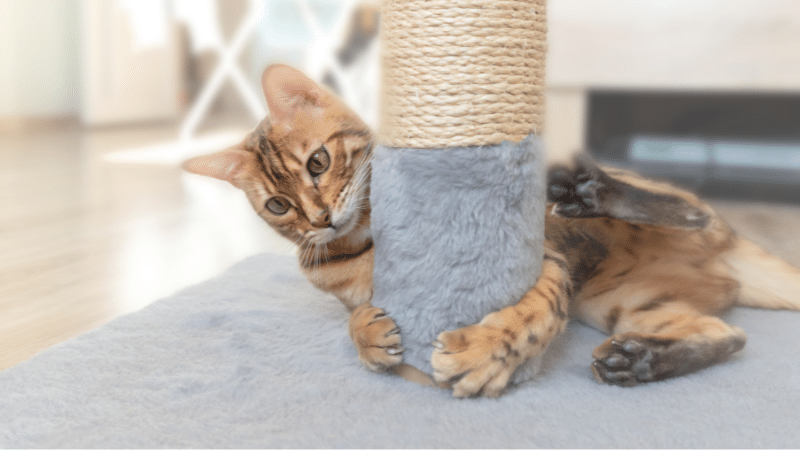
Scratching is not bad behaviour. It is one of the most natural things a cat does, and for an anxious cat it is far more than a way to sharpen claws. A well-placed cat scratching post can be a genuine tool for reducing stress, giving a nervous cat a healthy outlet and a sense of control over its environment. Understanding why cats scratch, and how scratching links to anxiety, helps you turn a simple post into an effective calming aid.
Why Cats Scratch
Cats scratch for several overlapping reasons, and none of them involve spite. Scratching keeps the claws healthy by shedding the outer sheath, stretches the muscles of the legs, shoulders and back, and marks territory both visually and through scent glands in the paws. This last point is where anxiety comes in. When a cat scratches, it leaves behind a familiar scent signal that says, in effect, this is my space. For a cat, a home that smells of itself feels safe.
You can read more about the instincts behind this and other feline habits in our overview of cat behaviour.
How Scratching Eases Anxiety
An anxious or over-stimulated cat needs ways to release tension, and scratching is one of the healthiest available. The physical act burns nervous energy, much as pacing or fidgeting does in humans, while the scent-marking reassures the cat that its territory is secure. A cat with no appropriate place to scratch may bottle up that stress, which can surface as over-grooming, hiding, litter tray problems or aggression.
Providing a scratching post gives your cat a constructive way to self-soothe. In multi-cat homes, where tension between cats is a common trigger for anxiety, several posts placed around the house can reduce competition and help keep the peace. If friction between your cats is a wider issue, our guide on how to stop cats fighting in your home covers the problem in more depth.
Choosing the Right Scratching Post
Not all posts are equal, and the wrong one will simply be ignored. A few features make all the difference:
- Height: The post should be tall enough for your cat to stretch fully, usually at least 80cm for an adult cat. A short post that forces the cat to hunch will not satisfy the urge to stretch.
- Stability: A wobbly post feels unsafe and will put an anxious cat off completely. A heavy, sturdy base is essential.
- Texture: Most cats prefer coarse materials such as sisal rope or sisal fabric, which give a satisfying resistance. Some also enjoy cardboard or carpet, so it can help to offer a couple of options.
- Orientation: Cats have individual preferences for vertical or horizontal scratching. If your cat claws the carpet, a horizontal or angled scratcher may suit it better than an upright post.
Placement Matters
Where you put the post is as important as the post itself. Cats often scratch to mark socially significant areas, so tucking the post away in a spare room defeats the purpose. Place posts in the spots your cat already frequents: near sleeping areas, by doorways and in the busier rooms of the home. A post beside a favourite napping spot is ideal, since cats love to scratch and stretch right after waking.
If your cat is targeting the furniture, position a post directly in front of the item being scratched, then gradually move it once the cat has switched allegiance. Our detailed advice on how to stop your cat from scratching furniture walks through this redirection step by step.
Scratching as Part of a Calm Home
A scratching post works best as one piece of a wider plan to keep your cat relaxed and content. Environmental enrichment, from climbing spaces to interactive play, gives an anxious cat outlets for its natural energy. Our guide to enrichment for indoor cats is full of practical ideas, and regular play sessions, whether with wand toys or by teaching your cat to walk on a lead, help release tension before it builds. If your cat’s anxiety shows up as mouthing or nipping, our advice on how to stop your cat from biting may also help.
Final Thoughts
A cat scratching post is a small investment that pays off in a calmer, more confident cat. By understanding why your cat scratches and providing sturdy, well-placed posts in the right materials, you give an anxious cat a healthy way to mark its territory, stretch its body and settle its nerves. If your cat’s anxiety persists despite these measures, speak to your veterinarian to rule out any underlying medical cause.