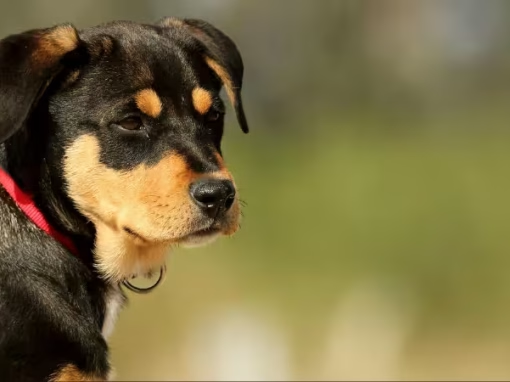
The horror and thriller genre has always relied on atmosphere, tension, and performances that feel authentic enough to unsettle audiences. With the release of Good Boy, one unexpected performer managed to outshine a field of seasoned human actors and claim a place in awards history. Indy, a Nova Scotia Duck Tolling Retriever, has become the first dog to win a major acting award, earning recognition for a performance that critics and audiences alike describe as gripping, emotional, and genuinely frightening.
The win has sparked widespread discussion about performance, storytelling, and how audiences respond to animals on screen. Good Boy has now become more than a film title; it represents a turning point in how acting is defined and celebrated.
Table of Contents
The Film That Put Indy in the Spotlight
What Good Boy Is About
Good Boy is a psychological horror-thriller that centres on isolation, paranoia, and the fragile bond between humans and animals. The film follows a man who retreats to a remote home, accompanied only by his dog, after a period of personal upheaval. As unsettling events unfold, the audience experiences the story largely through the dog’s reactions, behaviour, and emotional shifts.
Rather than treating the dog as a background presence or a simple companion, the film places Indy at the heart of the narrative. His performance drives the tension, signalling danger long before any overt horror is revealed. The result is a story that relies heavily on non-verbal acting, subtle cues, and behavioural realism.
A Horror Performance Without Words
What sets Good Boy apart from many other films featuring animals is the absence of anthropomorphism. Indy is not given exaggerated traits or comedic moments. Instead, the film allows him to behave like a real dog responding to abnormal and threatening circumstances. His body language, eye contact, and shifts in behaviour become essential storytelling tools.
Audiences and critics have noted that many of the film’s most disturbing moments occur without dialogue, relying solely on Indy’s reactions. This approach gave the performance an authenticity that resonated strongly with viewers.
Indy’s Award-Winning Moment
Beating Out Big-Name Actors
Indy’s historic win came at the Astra Awards, where he received the Best Actor honour for Good Boy. What made the moment particularly striking was the competition. Indy beat out a line-up of well-known human actors, including Ethan Hawke, whose performance had been widely praised in the same awards cycle.
The decision surprised many in the industry but was met with enthusiastic support from fans and commentators. Judges and organisers emphasised that the award was based purely on performance, not novelty. Indy’s work was assessed by the same criteria as his human counterparts, focusing on emotional impact, believability, and contribution to the story.
A First for Animal Performers
While animals have appeared in award-winning films for decades, they have rarely been formally recognised for acting. Indy’s win marks the first time a dog has received a major acting award in direct competition with humans. This milestone has reopened conversations about how animal performances are evaluated and whether existing award structures should evolve.
The recognition also highlights how much responsibility animal performers can carry in modern storytelling, particularly in genres like horror where atmosphere is critical.
Training, Behaviour, and Performance
How Indy Was Prepared for the Role
Indy’s performance did not happen by accident. Behind the scenes, extensive training and careful planning were essential. Professional animal trainers worked closely with the film’s director to ensure that Indy’s behaviour on screen remained natural while still serving the narrative.
Rather than teaching Indy a long list of tricks, the trainers focused on emotional responses and environmental cues. This allowed him to react organically to situations within each scene. His behaviour reflects genuine canine instincts, which is a major reason the performance feels believable.
Ethical Filmmaking With Animals
The production team for Good Boy has been open about their commitment to animal welfare. All scenes involving Indy were designed to avoid distress or harm, with trainers present at all times. Many of the film’s more intense moments were achieved through editing, sound design, and Indy’s reactions rather than placing him in frightening situations.
This ethical approach has been praised by animal welfare organisations and film professionals alike, showing that strong performances do not require compromising an animal’s well-being.
Why Indy’s Performance Resonated So Strongly
Audience Emotional Connection
Viewers tend to form immediate emotional bonds with animals on screen, but Good Boy takes this connection to a deeper level. Indy’s presence anchors the audience’s experience, making his fear and confusion feel personal. As the story progresses, viewers rely on him as a guide through the film’s unsettling events.
This emotional alignment makes the horror more effective. When Indy senses something is wrong, the audience believes him, even before understanding why.
Redefining What Acting Can Be
Indy’s award win challenges traditional ideas about acting. Without speaking a single line, he communicates fear, loyalty, suspicion, and distress. His performance demonstrates that acting is not limited to dialogue or facial expressions alone, but can also be conveyed through movement, posture, and behaviour.
This broader definition opens the door for greater appreciation of non-verbal performances, both animal and human.
Industry Reactions and Debate
Praise From Filmmakers and Critics
Many filmmakers have praised the Astra Awards for recognising Indy’s work. Directors and actors have spoken about how difficult it is to elicit genuine emotional responses on screen, noting that Indy achieved this consistently throughout Good Boy.
Critics have echoed these sentiments, describing the performance as one of the most memorable elements of the film. Some have argued that the award was overdue recognition for animal performers who often play critical roles without acknowledgement.
Questions About Award Categories
Indy’s win has also sparked debate about how awards ceremonies categorise performances. Some commentators have suggested creating dedicated categories for animal actors, while others argue that doing so could diminish the significance of Indy’s achievement.
For now, the Astra Awards’ decision to include him in a general acting category has been widely seen as a statement that performance quality matters more than species.
The Broader Impact of Good Boy
What This Means for Future Films
The success of Good Boy may influence how filmmakers approach animal roles in the future. Rather than treating animals as accessories to human characters, more productions may explore stories where animals carry emotional and narrative weight.
This shift could lead to richer storytelling and more nuanced depictions of human-animal relationships, particularly in genres that rely on atmosphere and psychological tension.
A Cultural Moment for Dog Lovers
Beyond the film industry, Indy’s achievement has resonated strongly with dog lovers around the world. Social media reactions have celebrated not only the award win but also the recognition of dogs as emotionally intelligent beings capable of complex behaviour.
For many viewers, Indy’s success reinforces what they already know from everyday life: dogs are highly perceptive, emotionally responsive, and deeply connected to the humans around them.
Why Good Boy Will Be Remembered
Good Boy will likely be remembered not just as a strong horror-thriller, but as a film that changed perceptions. Indy’s performance stands as proof that powerful acting does not require words, fame, or even a human face. It requires authenticity, emotional truth, and a connection with the audience.
As awards seasons come and go, Indy’s historic win remains a standout moment. It has challenged conventions, sparked conversation, and reminded audiences why animals have always held such a special place in storytelling.