Most cats take to a litter box without being taught, because burying waste in loose substrate is instinctive. The setup, though, matters more than owners expect. The wrong box, the wrong litter or a poor location causes toileting problems that are difficult to undo once the habit forms. Get the cat litter box right at the start and maintenance becomes a two minute daily routine.
Choosing the Right Cat Litter Box
There is no single best option. The right box depends on your cat’s size, age and mobility, and the test that matters is whether it suits the cat rather than the owner.
Size Is the Most Common Mistake
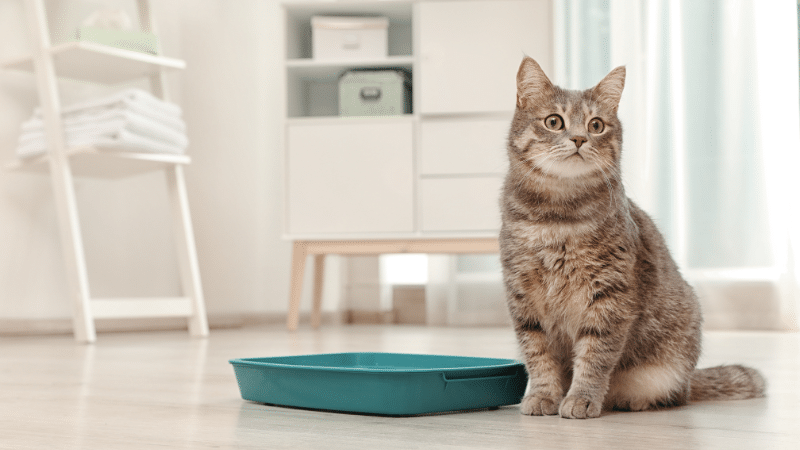
The working rule is that the box should be at least one and a half times the length of your cat, measured from nose to the base of the tail. Most boxes sold in pet shops are too small for a full grown adult. A cat that cannot turn around comfortably will often use the floor beside the box instead, which owners misread as a behavioural problem. When in doubt, go bigger: a plastic storage crate with one side cut down costs less than most purpose built boxes and fits better. There is more detail on choosing a litter box by size, material and location before you commit to a setup.
Open or Covered
Covered boxes contain odour and give a nervous cat privacy, but they also trap ammonia inside a small space, and a cat’s nose is far more sensitive to it than ours. If your cat hesitates at the entrance, backs out, or perches on the rim to avoid contact with the litter, a hood may be part of the problem. Start open. Move to covered only if there is a specific reason, such as a dog in the house that raids the box.
Automatic and Self-Cleaning Boxes
An automatic cat litter box suits households that cannot scoop daily, and the better self-cleaning models genuinely reduce odour. The catch is noise: a rake or drum motor starting up near a cat is enough to put some cats off permanently. Introduce one with the power off for the first week, then enable the cycle once use is established, and keep the old box available rather than swapping straight over.
How Many Litter Boxes Do You Need?
The standard recommendation is one box per cat plus one spare. Two cats need three boxes. This is not excessive: it reduces territorial competition and guarantees a clean option is always available.
Placement matters as much as the number. Spread boxes across different parts of the home, because clustering them in one room lets a single cat guard all of them at once. In a multi-storey house, put at least one box on each floor. Senior cats with arthritis need a low entry lip and no stairs, since having to travel urgently is a common cause of accidents in older animals.
Choosing a Litter Cats Will Actually Use
Texture is the deciding factor for most cats, and the general preference is for fine grained, unscented, clumping litter that feels close to sand underfoot. Heavily perfumed varieties are marketed at owners, not cats, and many cats avoid them outright.
- Clumping clay: the default. Easy to scoop, good odour control, widely available.
- Silica crystals: excellent absorption and low tracking, but expensive, and some cats find the texture sharp.
- Pine, maize or recycled paper: lighter and lower impact, but acceptance varies between individual cats.
If you change litter, do it gradually by mixing the new type into the old over a week or two. An abrupt switch is one of the most frequent triggers for sudden box avoidance. Commercial litter is a recent invention, and the development of the litter box is a useful reminder that plain sand still works.
Litter Training a Kitten
Kittens seek out loose substrate on their own, so this is easier than most first time owners expect and usually takes days rather than weeks. Our guide to litter training a kitten step by step covers it in full, but the essentials are short:
- Place the kitten in the box after meals, waking and play.
- Scratch the litter lightly with a finger to prompt digging.
- Praise quietly, and never startle a kitten mid use.
- Never punish an accident. Clean with an enzymatic cleaner so no scent marker remains.
When a kitten repeatedly misses, the cause is nearly always the setup rather than the animal: the box is too far away, too small, too deep, or in a spot that feels exposed.
Maintenance Is the Non-Negotiable Part
Cleaning frequency predicts success better than any other variable, because many cats will simply refuse a soiled tray.
- Daily: scoop clumps and solids.
- Weekly: top up fresh litter and wipe the interior walls.
- Monthly: empty completely and scrub with hot water and a mild unscented soap, then dry fully before refilling.
Avoid bleach and strongly scented cleaners. The ammonia note in bleach reads as another cat’s urine and will drive a cat away from a box you have just cleaned.
When a Trained Cat Starts Missing the Box
Rule out a medical cause first. Urinary tract infections, cystitis, bladder stones and kidney disease all make urination painful, and a cat that hurts while using the box begins to blame the box. If the change was sudden, see a vet before trying anything behavioural. The Cornell Feline Health Center publishes accessible owner guidance on the urinary conditions involved.
Once health is cleared, the usual causes are infrequent cleaning, a recent change of litter, a box moved to a new spot, or a new person or animal in the house. Conflict between cats is a common and often missed trigger, and tension between cats in the same home frequently shows up as inappropriate elimination before any open fighting is seen. Where one cat is actively intimidating another, resolving the underlying aggression fixes the toileting more reliably than any change of tray or litter. Adding enrichment for indoor cats lowers the background stress that drives a lot of these cases in the first place.