A bouncing, excited dog might seem charming when it is a tiny puppy, but the same behaviour becomes a real problem once that puppy grows into a strong adult. Jumping up is one of the most common complaints among dog owners, and it is easy to see why. Muddy paws on clean clothes, scratches on bare arms, and the very real risk of knocking over a child, an elderly visitor, or someone who is simply nervous around dogs all turn an affectionate greeting into a liability. The good news is that, with patience and consistency, you can teach a dog of any age to greet people calmly. This guide explains why dogs do it and shows you practical, kind ways to stop your dog from jumping on people.
Table of Contents
Why Dogs Jump up on People
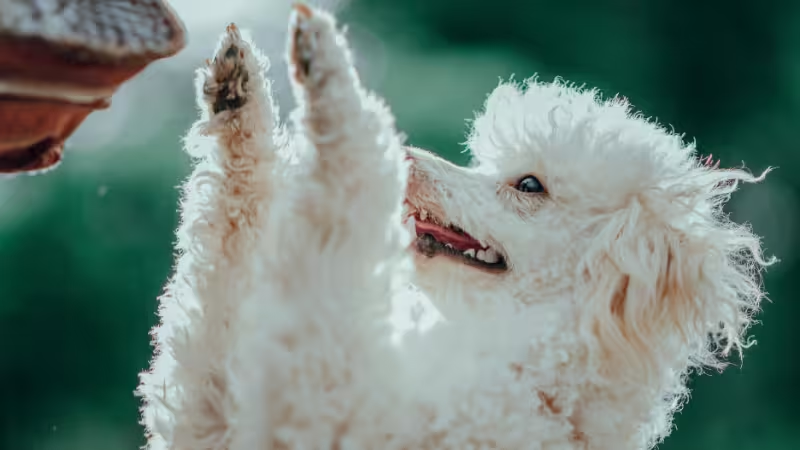
Dogs are social animals, and jumping is a natural way for them to say hello. When dogs greet one another they do so face to face, so when your dog launches itself upwards it is simply trying to close the enormous height gap between its nose and yours. Reaching your face feels like the friendliest, most natural thing in the world to your dog.
Underneath that instinct sits a simpler motive: attention. Most dogs crave interaction, and they quickly learn that putting their front paws on a person produces a reaction. Whether that reaction is laughter, a pat, or even a sharp "no", the dog has succeeded in getting noticed. For an attention-seeking dog, almost any response counts as a reward.
How We Accidentally Train Jumping
Owners usually create the habit without realising it. A fluffy puppy that stands on its back legs looks adorable, so we crouch down, fuss over it, and sometimes even reward it with a treat as though it has learned a clever trick. The puppy files this away as a winning strategy. Years later, when a fully grown dog does exactly the same thing, the message has already been set in stone.
Inconsistency makes the problem worse. Many people are happy for the dog to jump on them at home but not on guests, or they allow it in old clothes but not smart ones. Dogs are not good at telling these situations apart. If jumping is sometimes rewarded, the dog assumes it is always worth a try.
Excitement and a Lack of Structure
Jumping often spikes when a dog is over-excited and does not know how to manage that energy. A dog with very few rules or boundaries struggles to regulate itself, so the moment something thrilling happens, such as a visitor arriving, the excitement spills over into jumping, barking, and sometimes mouthing at hands. Giving a dog clearer structure in daily life helps it stay calmer in these high-energy moments.
The Rare Case of Aggression
There is one uncommon but important exception. Very occasionally what looks like jumping is actually a warning. If a dog has its hackles raised, is growling, holding its tail low, baring its teeth, or snapping, this may be defensive behaviour rather than an excited greeting. This situation is genuinely dangerous and is not something to train away on your own. If you see these signs, stop and contact a qualified canine behaviourist or your vet for professional help.
Managing the Situation Before You Train
Solving a jumping habit involves two things working together: managing the environment so the dog cannot rehearse the bad behaviour, and training the dog to choose a better one. Management buys you time while the training takes hold.
Imagine a dog that throws itself at every visitor. Before your guest arrives, you can set the dog up for success by settling it in its crate, popping it into another room, or keeping it on a lead beside you and asking it to sit as the door opens. Each option removes the chance to jump, which means the dog is not practising and reinforcing the very habit you are trying to break. Think of management as a temporary support that you rely on until the new manners are reliable.
Training Your Dog Not to Jump
The core principle behind almost every effective method is simple: jumping must never pay off, and calm behaviour must always be rewarded. Trainers often call this "four on the floor". Your dog only earns your attention, your voice, and your touch when all four paws are on the ground.
Reward Calm, Ignore the Jumping
When your dog jumps up, give it nothing it wants. No eye contact, no talking, not even a scolding, because to an attention-hungry dog being told off is still attention. Simply turn away, fold your arms, and wait. The instant the dog has all four feet down and settles, you can quietly greet and praise it. Coming home is a classic flashpoint, so keep your arrivals low-key. You may have to walk in and straight back out of the door many times before your dog grasps that calm feet earn your hello. If your dog jumps while you are sitting down, stand up calmly and ignore it until it settles, rather than pushing it away.
Teach an Incompatible Behaviour
A dog cannot sit and jump at the same time, which makes "sit" the perfect replacement behaviour. Teach a solid sit first, rewarding generously with praise and treats. Once your dog sits reliably on cue, start asking for a sit whenever it approaches a person. Over time the dog learns that sitting, not leaping, is what makes good things happen, and many dogs begin to offer a polite sit on their own when they greet someone. A cue such as "off" can also be helpful for asking the dog to put its paws back on the floor.
Practise With Cooperative Visitors
Real-world practice cements the lesson. Ask a few friends your dog likes to act as "training visitors" who understand the plan. Have your guest approach while your dog sits on a lead. If the dog stands or lunges, the visitor immediately turns and walks away, removing the reward. Ask for the sit again and repeat the approach. The moment your dog stays seated, the visitor can offer calm praise or a treat. With a new guest, keeping your dog on a lead for the first fifteen minutes or so helps keep the excitement manageable until everyone has settled.
Exercise and Socialisation
A dog that is well exercised, both physically and mentally, has less pent-up energy to discharge through jumping. A structured walk in the heel position, for example, works the brain as much as the body and builds the impulse control that jumpy dogs so often lack. A well-socialised dog that is used to meeting people is also less likely to become frantic at the sight of someone new.
Be Consistent
Consistency is the ingredient that holds everything together. Every member of the household, and ideally every visitor, must follow the same rules every single time. You cannot allow jumping on Monday and forbid it on Tuesday. When someone says, "Oh, I don't mind", it is perfectly fine to thank them and explain that you do mind, because mixed messages slow everything down.
What Not to Do
Punishment has no place in this training. Kneeing your dog in the chest, stepping on its toes, shouting, or shoving it away usually backfires, because a boisterous dog often reads the physical contact as a fun game and jumps even more. At worst, harsh handling can frighten a dog and tip it towards defensive or aggressive responses, which is the opposite of what you want. Keep the safety of your dog, your guests, and yourself front of mind, and reward the behaviour you want instead of fighting the behaviour you don't.
When to Call in a Professional
Most jumping is rooted in friendly excitement and responds well to the calm, consistent approach above. If progress stalls, or if you ever see signs of aggression rather than enthusiasm, reach out to a qualified dog trainer or canine behaviourist. Structured classes and one-on-one guidance can make a real difference, and your vet can usually recommend someone reputable in your area.
Teaching your dog to keep all four paws on the floor takes time and repetition, but the payoff is a dog that greets everyone politely, a home you are proud to welcome people into, and a companion that is a pleasure to take anywhere.