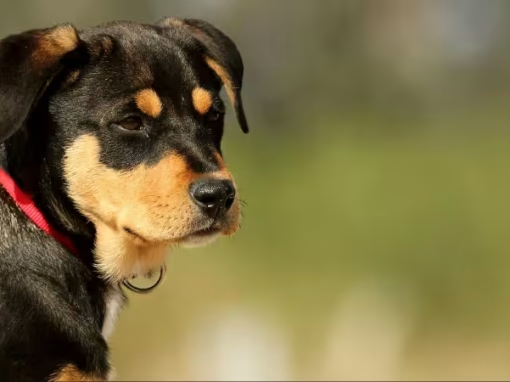
The Rottweiler consistently ranks among the most popular dog breeds in South Africa — prized for their intelligence, loyalty, and natural protective instincts. But Rottweilers are also one of the most misunderstood breeds. Behind the intimidating build is a calm, confident dog that, when properly raised, is gentle with family, reliable with children, and remarkably trainable.
Rottweiler Origins
Rottweilers trace their lineage to Roman drover dogs that accompanied legions across Europe, guarding cattle that fed the armies. When the Romans settled in what is now southern Germany — particularly the town of Rottweil — these dogs became essential for local butchers, pulling carts of meat to market and guarding the proceeds. The breed’s working heritage explains their strength, endurance, and deep-rooted drive to protect.
Rottweiler Temperament
- Confident and calm: Well-bred Rottweilers have a quiet self-assurance. They don’t bark unnecessarily or react to every stimulus — they observe, assess, and respond proportionally.
- Loyal to family: Rottweilers bond deeply with their household. They’re affectionate with their people — many are “leaners” who press their body against you as a sign of trust.
- Protective but not aggressive: A properly socialised Rottweiler distinguishes between genuine threats and normal visitors. Aggression in Rottweilers is almost always the result of poor breeding, inadequate socialisation, or abusive training.
- Good with children: Rottweilers are generally patient and gentle with children they’re raised with. Their size means supervision is important with toddlers — not because of aggression, but because a 50kg dog can accidentally knock over a small child.
- Reserved with strangers: Unlike Labradors who greet everyone like a long-lost friend, Rottweilers are naturally reserved with unfamiliar people. This isn’t hostility — it’s watchfulness.
Training a Rottweiler
Rottweilers are intelligent and eager to work, which makes them highly trainable — but they need consistent, confident handling. They respond best to positive reinforcement with clear boundaries.
Key Training Priorities
- Early socialisation: Exposure to different people, dogs, environments, and situations between 8–16 weeks is critical. A Rottweiler that misses this window can become overly suspicious or reactive.
- Basic obedience: Sit, stay, come, and loose-leash walking should be established by 6 months. A 50kg dog that pulls on a leash is unmanageable.
- Impulse control: Teaching a Rottweiler to wait, leave it, and settle is more important than tricks. Their strength means impulse control has safety implications.
Avoid dominance-based training methods (alpha rolls, leash corrections, intimidation). Rottweilers trained with punishment become anxious and unpredictable. Trained with consistency and reward, they’re cooperative and reliable. For more on effective methods, read our guide to common training mistakes.
Rottweiler Health
Common Health Issues
- Hip and elbow dysplasia: Common in large breeds. Causes lameness, pain, and arthritis. Reputable breeders screen both parents.
- Osteosarcoma (bone cancer): Rottweilers have a higher incidence than most breeds. It typically affects the limbs and is unfortunately aggressive. Early lameness should always be investigated.
- Cruciate ligament tears: Their weight puts stress on the knee joints. Active dogs are more prone; maintaining a healthy weight reduces risk.
- Gastric torsion (bloat): A life-threatening emergency where the stomach twists. Large, deep-chested breeds are most at risk. Feed smaller meals and avoid exercise immediately after eating.
- Heart conditions: Subaortic stenosis and dilated cardiomyopathy can occur. Annual cardiac screening is advisable.
Lifespan: 8–10 years on average, though some live to 12+ with excellent care.
Exercise and Activity
Rottweilers are athletic dogs that need daily exercise — 60–90 minutes for adults. This includes:
- Structured walks (always on-leash in public — their size and breed reputation mean off-leash walking is risky in South African public spaces)
- Mental stimulation: obedience training, puzzle toys, fetch
- Moderate play — avoid high-impact exercise in puppies (under 18 months) to protect developing joints
A dog treadmill is particularly useful for Rottweilers during extreme weather or when outdoor walking isn’t practical.
Rottweilers in South Africa
Rottweilers are widely bred in South Africa, but quality varies enormously. Puppy mills and backyard breeders produce dogs with poor temperaments and health. Buy only from breeders who:
- Are registered with KUSA (Kennel Union of Southern Africa)
- Health-screen parents for hip/elbow dysplasia (minimum)
- Temperament-test puppies
- Socialise litters properly before placement
Be aware that some insurance companies and body corporates in South Africa have breed-specific restrictions that include Rottweilers. Check before committing.
The Rottweiler isn’t a dog for everyone — they need space, exercise, consistent training, and an owner confident enough to lead without intimidation. But for the right person or family, there are few breeds as loyal, intelligent, or rewarding to live with.
See also: dog breeds in South Africa, the Boerboel, and best dog breeds for kids.