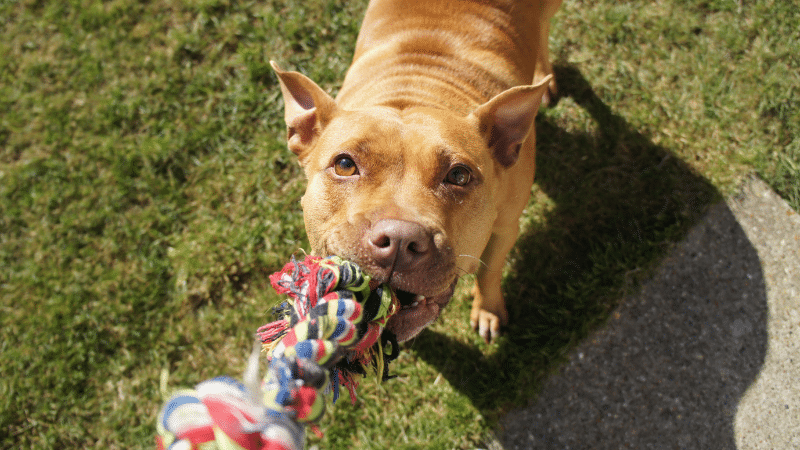
Play is how dogs explore, learn, and connect. It is also one of the most underused tools in a dog owner's relationship-building toolkit. The right toys, used well, do far more than keep your dog occupied — they reduce anxiety, reinforce good behaviour, and create moments of genuine connection between you and your dog.
Why Toys Matter Beyond Entertainment
Dogs that lack adequate mental and physical stimulation tend to find their own outlets — chewing furniture, digging, excessive barking, or becoming destructive when left alone. Toys give dogs appropriate channels for natural behaviours like chasing, tugging, and problem-solving. This is not just about keeping them busy; it is about meeting fundamental needs.
The social dimension is equally important. When you are the one initiating play, guiding it, and ending it on a positive note, you reinforce your role as a trusted partner in your dog's world. That dynamic is the foundation of a well-adjusted dog. Understanding how dogs think helps you appreciate why this matters so much.
Types of Dog Toys and What They Are Good For
Interactive and Puzzle Toys
Puzzle feeders and interactive toys make dogs work for their food or treats. This taps into their natural foraging instincts and provides mental stimulation that physical exercise alone does not cover. A dog that spends 15 minutes working through a puzzle feeder at breakfast is measurably calmer than one that simply bolts food from a bowl.
These toys are particularly valuable for high-drive breeds or dogs that are left alone during the day. Start with easier puzzles and progress — the goal is challenge, not frustration.
Fetch Toys
Fetch combines physical exercise, impulse control, and cooperative play in a single activity. Teaching your dog to bring the ball back rather than just chase it is a training exercise in its own right. A good retrieve starts with patient, reward-based shaping rather than chasing the dog down for the toy.
Tug Toys
Tug gets an undeserved bad reputation — the idea that it makes dogs dominant or aggressive is outdated. When played with clear rules (you initiate, you end it, the dog drops on cue), tug is an excellent outlet for prey drive and a powerful training reward. Many professional trainers use a tug toy as a high-value motivator, particularly for dogs that are less food-driven.
Chew Toys
Chewing is a natural stress-reliever for dogs. Providing appropriate chew toys — rubber toys, bully sticks, raw bones suited to your dog's size — gives them an outlet that protects your furniture and supports dental health. Avoid cooked bones, which splinter, and anything small enough to be swallowed whole.
Using Toys in Training
Toys are training tools, not just rewards. Once a dog is reliably motivated by a specific toy, it becomes a versatile reinforcer for teaching new behaviours. This pairs naturally with positive reinforcement training — the toy becomes the jackpot reward for getting something right.
Clicker training works particularly well when combined with toy play. The click marks the correct behaviour, and the tug session or fetch game that follows is the reinforcer. This approach tends to produce fast learners because the dog is genuinely excited about what comes next.
The key is keeping the toy special. A toy that lives on the floor all day loses its value quickly. High-value toys — the ones you use for training or structured play — should be put away when you are done and brought out again with intention.
Toy Safety: What to Watch For
Not every toy marketed at dogs is safe for every dog. Size matters — a toy designed for a small breed can be a choking hazard for a large one. Material matters — some dogs destroy toys in minutes and swallow pieces. Know your dog's play style before buying.
- Supervise play with any new toy until you know how your dog interacts with it.
- Discard toys with loose parts, exposed stuffing, or structural damage.
- Squeakers are a known target for dogs that like to destroy their toys — remove squeakers before they become a swallowing risk.
- Rope toys fray with heavy use. Loose strands can be ingested and cause intestinal blockages.
How Much Playtime Is Enough?
There is no universal answer — it depends on breed, age, and energy level. As a general guide, most adult dogs benefit from at least two dedicated play or exercise sessions per day, each 15 to 30 minutes long. Mental stimulation through puzzle toys or training adds another dimension that pure physical exercise does not cover.
Puppies play hard and tire quickly — short sessions of 5 to 10 minutes are more appropriate than marathon play. Senior dogs still need engagement, but lower-impact toys and shorter sessions suit their joints and energy levels better.
The relationship you build through consistent, positive play pays dividends in every other aspect of your dog's behaviour. Dogs that feel engaged, secure, and bonded to their owner are easier to train, calmer in new environments, and more resilient under stress. If you are seeing behavioural problems alongside low engagement, it may be worth exploring whether structured training could help alongside a more deliberate play routine.