Bringing a new puppy home is exciting, but potty training a puppy is one of the first real challenges you will face as a pet owner. The good news is that with consistency, patience, and the right approach, puppy potty training does not have to be a drawn-out battle. Most puppies can learn reliable toilet habits within a few weeks when you follow a structured routine.
This guide covers everything you need to know about potty training your puppy, from establishing a schedule to handling setbacks without losing your mind.
Why Timing Matters When Potty Training a Puppy
Puppies as young as eight weeks can begin learning where to do their business, but their bladders are small and their control is limited. A general rule is that a puppy can hold its bladder for roughly one hour per month of age. So a three-month-old pup can manage about three hours at most.
Starting potty training early sets the foundation for good habits. The longer you wait, the harder it becomes to undo patterns your puppy has already formed. If you have just brought your puppy home, begin on day one.
Setting Up a Potty Training Routine
Consistency is the single most important factor in successful puppy potty training. Your puppy needs to learn when and where it is appropriate to relieve itself, and that only happens through repetition.
Key Times to Take Your Puppy Outside
- First thing in the morning, immediately after waking up
- After every meal or drinking session
- After naps or play sessions
- Last thing before bedtime
- Every 1-2 hours during the day for young puppies
Take your puppy to the same spot each time. The scent from previous visits will signal to your pup that this is the right place. Wait quietly until they go, then offer calm praise and a small treat straight away. This kind of positive reinforcement is far more effective than punishment and builds a trusting relationship between you and your dog.
Using Puppy Potty Training Pads
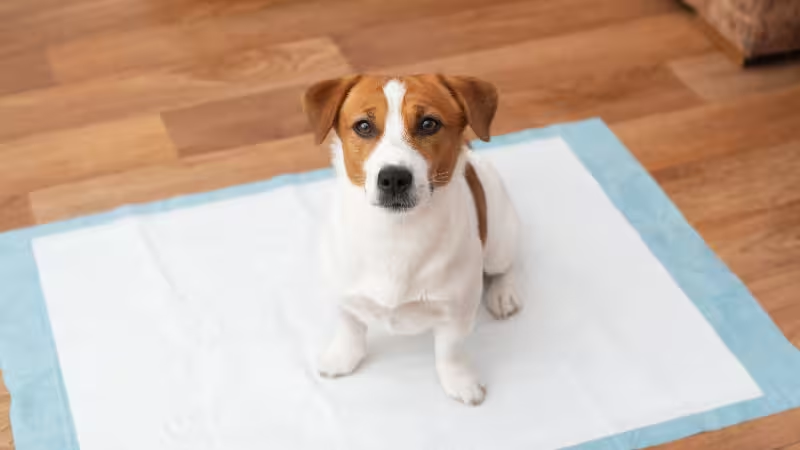
Puppy potty training pads can be useful in certain situations, particularly if you live in a flat without easy garden access, or during harsh weather. Place the pad in a consistent location away from your puppy’s sleeping and eating area.
However, be aware that pads can sometimes slow progress. A puppy trained on pads may take longer to transition to going outside, because they have learned that going indoors is acceptable. If your goal is outdoor toilet training, use pads only as a temporary measure and gradually move them closer to the door before phasing them out entirely.
Crate Training as a Potty Training Tool
A crate, used correctly, is one of the most effective potty training aids available. Dogs naturally avoid soiling their sleeping area, so a properly sized crate encourages your puppy to hold on until you let them out.
The crate should be just large enough for your puppy to stand up, turn around, and lie down comfortably. If it is too large, they may use one end as a toilet. Take your puppy outside immediately after letting them out of the crate, and praise them when they go in the right spot.
Never use the crate as punishment, and never leave a young puppy crated for longer than they can reasonably hold their bladder.
Recognising the Signs Your Puppy Needs to Go
Learning to read your puppy’s body language will save you from countless indoor accidents. Watch for these common signals:
- Sniffing the floor or circling in one spot
- Whining or barking at the door
- Restlessness or suddenly stopping play
- Squatting or moving towards a corner
When you spot any of these signs, act quickly. Calmly pick your puppy up or guide them outside without making a fuss. The faster you respond, the stronger the association between going outside and doing their business.
Handling Accidents the Right Way
Accidents will happen. It is part of the process, and losing your temper will only make things worse. If you catch your puppy mid-accident, interrupt them with a calm “outside” and take them to the correct spot immediately. If they finish outside, praise them.
If you find an accident after the fact, simply clean it up. Rubbing a puppy’s nose in it or shouting achieves nothing. Your puppy cannot connect a past action with your current reaction, and harsh corrections can lead to fear and anxiety, which actually makes potty training harder. This is one of the most common dog training mistakes new owners make.
Use an enzymatic cleaner to remove all traces of urine or faeces. Standard household cleaners may not fully eliminate the scent, and if your puppy can still smell it, they are likely to use the same spot again.
Potty Training Tips for Puppy Owners
These practical potty training tips will help you stay on track and avoid common pitfalls:
- Keep a log. Note the times your puppy eats, drinks, and relieves itself. Patterns will emerge that help you anticipate their needs.
- Control food and water intake. Feed your puppy at set times rather than leaving food out all day. Remove the water bowl about two hours before bedtime to reduce overnight accidents.
- Supervise constantly. When your puppy is not in their crate, keep them in the same room as you. Use baby gates or a lead attached to your belt to limit their freedom until they are reliable.
- Be patient with setbacks. Regression is normal, especially during teething, growth spurts, or changes in routine. Go back to basics if needed.
- Start socialisation early. A confident, well-socialised puppy adapts more easily to new environments, which makes outdoor toilet training smoother. Read our guide to socialising your puppy for practical steps.
Night-time Potty Training
Young puppies will need at least one toilet break during the night. Set an alarm for halfway through the night, take your puppy outside quietly, let them do their business, and return to the crate without any play or excitement. As they grow and their bladder capacity increases, you can gradually push this break later until they can sleep through.
Most puppies can reliably hold it through the night by about four to five months of age, though this varies by breed and individual. If you are curious about breed-specific traits, our article on the top dog breeds in South Africa covers temperament and trainability differences.
When to Seek Professional Help
If your puppy is older than six months and still having frequent accidents despite consistent training, it may be worth consulting a veterinarian to rule out urinary tract infections or other medical issues. Persistent house-soiling can also indicate anxiety or a behavioural issue that benefits from professional assessment.
Similarly, if your puppy is biting or mouthing excessively alongside toilet troubles, these may be signs of broader behavioural challenges that a qualified trainer can help address.
Final Thoughts
Potty training a puppy takes time, but it does not have to be stressful. Stick to a routine, reward success, clean up accidents calmly, and trust the process. Every puppy learns at their own pace, and with consistent positive reinforcement, yours will get there.