What Is Positive Reinforcement Training?
Positive reinforcement training is a method built on a simple principle: behaviours that are rewarded are more likely to be repeated. When your dog sits and receives a treat, it learns that sitting leads to good things. Over time, the behaviour becomes reliable — not because the dog fears punishment, but because it has genuinely learned that cooperation pays off.
This approach is grounded in behavioural science and is endorsed by veterinary behaviourists, professional trainers, and animal welfare organisations worldwide. It is not permissive or soft — it is structured, intentional, and highly effective.
Why Positive Reinforcement Works
Dogs are opportunistic learners. They constantly assess what works in their favour and what does not. Positive reinforcement harnesses this natural tendency by making desirable behaviours the most rewarding option available.
Compared to punishment-based methods, positive reinforcement:
- Builds trust — your dog associates you with good outcomes, not pain or intimidation.
- Reduces fear and anxiety — dogs trained with positive methods show fewer stress signals.
- Produces more reliable behaviours — a dog that obeys out of trust is more consistent than one that obeys out of fear.
- Strengthens your bond — training becomes a shared, enjoyable activity rather than a source of conflict.
The Core Tools
Treats
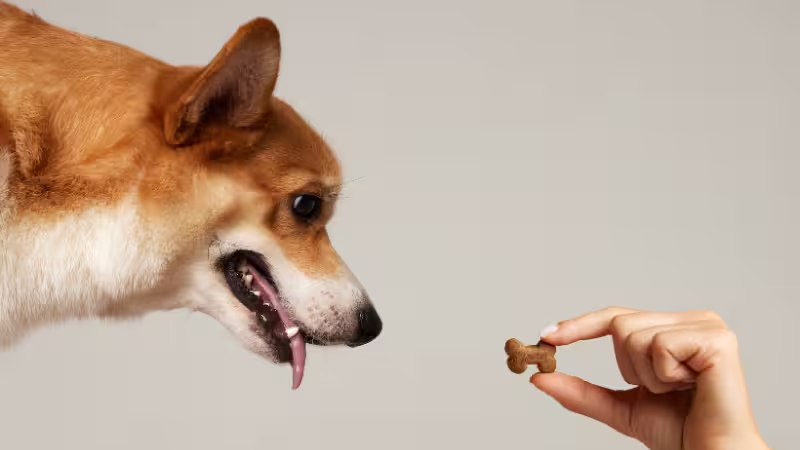
Food rewards are the foundation of positive reinforcement for most dogs. Use small, soft, high-value treats that your dog genuinely loves. Treat-based training works because food is a primary reinforcer — its value does not need to be learned.
Vary your treats. Use everyday kibble for easy behaviours and save high-value rewards (cheese, chicken, liver) for challenging situations or new skills.
Markers
A marker is a signal that tells your dog the exact moment it did something right. The most common markers are:
- Clicker — a small device that makes a consistent “click” sound. Clicker training is one of the most precise forms of positive reinforcement.
- Verbal marker — a short word like “yes” or “good,” delivered in a consistent, upbeat tone.
The marker bridges the gap between the behaviour and the reward, making it clear to your dog exactly what earned the treat.
Praise and Play
Not every reward needs to be food. Verbal praise, petting, and play can all reinforce behaviour. Some dogs are more motivated by a game of tug than a treat. Learn what your individual dog values most and use it strategically.
How to Apply Positive Reinforcement
Teaching New Behaviours
Luring: Use a treat to guide your dog into position. Hold a treat above a dog’s nose and move it backwards to lure a sit. Mark and reward the moment the bum touches the ground.
Shaping: Reward successive approximations of the desired behaviour. If you want your dog to go to its bed, first reward looking at the bed, then walking towards it, then stepping on it, then lying down on it.
Capturing: Wait for your dog to offer the behaviour naturally, then mark and reward it. This works well for behaviours your dog already does — like sitting before meals or lying down to rest.
Adding a Cue
Only add a verbal cue (like “sit” or “down”) once your dog is offering the behaviour reliably. Say the cue just before the dog performs the action, then mark and reward. This pairs the word with the behaviour.
Fading Rewards
Once a behaviour is reliable, gradually reduce the frequency of treats. Move to a variable reinforcement schedule — rewarding every second, third, or fifth successful repetition. This actually makes the behaviour stronger, because the dog learns that persistence pays off.
Common Mistakes in Positive Reinforcement Training
Even with the right approach, mistakes happen. Here are the most common ones — and for a deeper dive, read our guide to common dog training mistakes:
Rewarding too late. If the treat comes three seconds after the behaviour, the dog may not connect the two. Mark immediately and deliver the treat within two seconds.
Inconsistent cues. If you say “sit” sometimes and “sit down” other times, you are confusing your dog. Pick one cue per behaviour and stick with it.
Training sessions that are too long. Five to ten minutes is plenty. End on a success, not frustration.
Skipping socialisation. Positive reinforcement applies to more than just commands. Socialising your puppy using positive associations is one of the most important things you can do in the first four months.
When to Seek Professional Help
Positive reinforcement works for the vast majority of training goals, but some issues — particularly aggression, severe anxiety, and deeply ingrained problem behaviours — may require the help of a qualified behaviourist. Look for professionals who use evidence-based, force-free methods.
Final Thoughts
Positive reinforcement is not a trend — it is the most effective, humane, and scientifically supported approach to dog training available. It works for puppies learning their first commands and for adult dogs overcoming problem behaviours. Start with clear goals, be consistent with your markers and rewards, and you will build a relationship with your dog based on trust rather than fear. That is the foundation for everything else. For practical lead work using these principles, see our lead training guide.