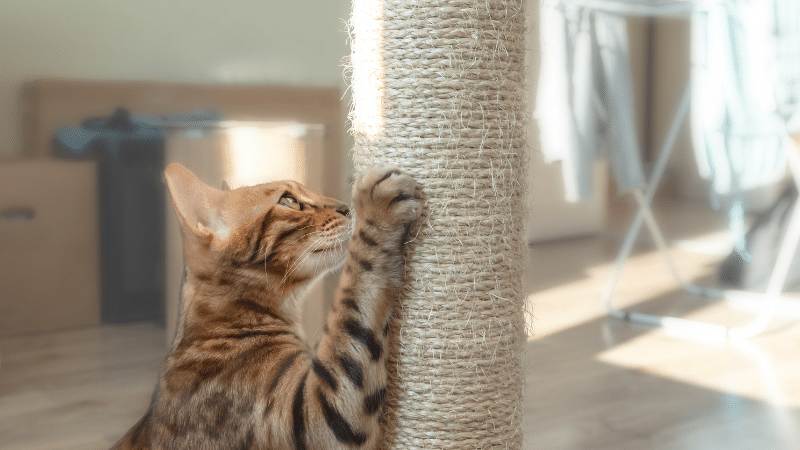
If you’ve been told that cats can’t be trained, you’ve been misinformed. Cats are intelligent, curious animals that respond well to reward-based training — they just learn differently to dogs. Where a dog might perform a trick to please you, a cat performs it because there’s something in it for them. That’s not a flaw; it’s a feature. Understanding this distinction is the key to successful cat training.
Can You Really Train a Cat?
Yes. Cats can learn to come when called, sit on cue, use a toilet, walk on a leash, give a high five, stay off counters, and use a scratching post instead of your furniture. Some cats learn complex tricks; others master basic house rules. The ceiling depends on the individual cat — and on the trainer’s patience.
What cats won’t do is respond well to force, punishment, or repetitive drill-style training. If your approach involves spraying water, shouting, or physically moving your cat, you’ll create a fearful cat, not a trained one.
The Foundation: How Cats Learn
Positive Reinforcement
Cats learn through association — specifically, through operant conditioning. When a behaviour is immediately followed by something the cat values (a treat, play, or attention), the cat is more likely to repeat it. This is the same principle behind positive reinforcement in dog training, but with cats, timing and reward choice matter even more.
Timing Is Everything
You have about 1–2 seconds to reward a cat after the desired behaviour before they lose the connection between action and reward. A clicker (a small device that makes a consistent “click” sound) bridges this gap — click the instant the cat does the right thing, then deliver the treat. The click becomes a precise “yes, that’s what I wanted.”
Keep Sessions Short
Cats have limited patience for structured training. Sessions of 3–5 minutes, 2–3 times a day, are far more effective than a single 20-minute session. End every session on a success — even if it means asking for something easy just so you can reward it.
Essential Cat Training: Where to Start
1. Come When Called
This is the most useful behaviour to teach. Start by saying your cat’s name (or a specific recall word) every time you feed them. Once they associate the word with food, try it from another room. When they come, reward immediately. Gradually increase the distance and test in different contexts.
2. Sit
Hold a treat above your cat’s head and move it slightly backward. As their head tilts up to follow the treat, their rear naturally lowers. The instant they sit, click and treat. Add the verbal cue “sit” once the behaviour is reliable.
3. Scratching Post Training
Cats need to scratch — it’s not negotiable. Your job is to redirect scratching to appropriate surfaces. Place a scratching post near where they currently scratch (usually furniture). Rub catnip on the post, reward any interaction with it, and cover the furniture temporarily with double-sided tape or aluminium foil. For more on this, read our guide to stopping cats from scratching furniture.
4. Litter Training
Most kittens take to litter trays instinctively, but occasionally you’ll need to guide the process. Our kitten litter training guide covers this step by step.
5. Staying Off Counters
Cats climb because they want a high vantage point and because counters often have food. Provide an alternative high spot (a cat tree or shelf), remove food temptation from counters, and reward your cat for using their designated perch. Read our detailed guide to keeping cats off counters.
Common Cat Training Mistakes
- Using punishment: Spraying water, shouting, or physical correction creates fear and damages your relationship. It doesn’t teach the cat what to do instead.
- Training when the cat isn’t interested: If your cat walks away, let them. Forcing a session guarantees failure.
- Low-value rewards: Dry kibble isn’t motivating enough for most cats. Use small pieces of chicken, fish, or commercial cat treats they genuinely love.
- Expecting dog-like enthusiasm: Cats don’t wag tails or bounce with excitement. A cat that performs a behaviour calmly and consistently is a well-trained cat.
When to Seek Professional Help
If your cat shows aggression, extreme fear, compulsive behaviours (overgrooming, excessive vocalisation), or sudden behavioural changes, consult a veterinary behaviourist before attempting training-based solutions. These behaviours often have medical or psychological causes that training alone can’t address.
Cat training isn’t about control — it’s about communication. Once you learn to speak your cat’s language (short sessions, high-value rewards, perfect timing), you’ll be surprised how much they’re willing to learn.