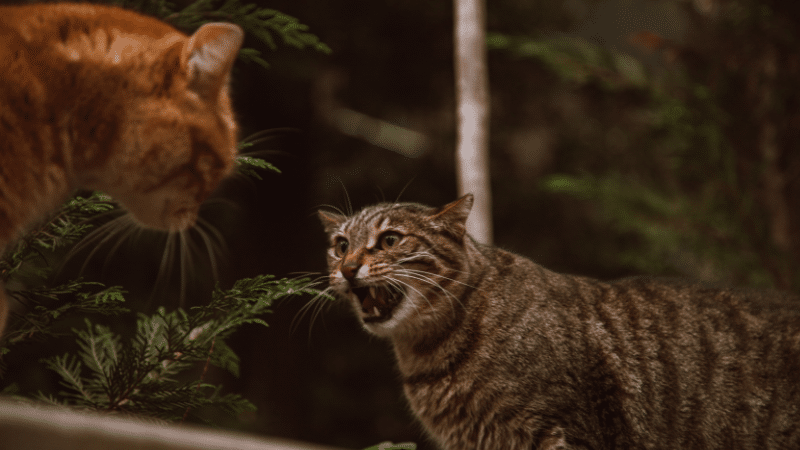
Why Cats Fight: Understanding the Root Causes
Cat fights in multi-cat households are rarely random. They stem from specific triggers — resource competition, territory disputes, fear, or social incompatibility. Understanding which cause is driving the conflict is the first step to resolving it. Lumping all cat aggression into a single problem and applying generic solutions rarely works.
Territory and Resource Guarding
Cats are inherently territorial animals. In a domestic setting, territory means more than just physical space — it extends to food bowls, favourite resting spots, litter boxes, and even specific people. When resources feel scarce or when one cat consistently blocks another's access, tension escalates. This is especially common in smaller homes where cats can't maintain natural distance from each other.
Introduction Gone Wrong
Many cat fights trace back to an introduction that happened too fast. When a new cat is brought straight into a resident cat's territory without proper scent familiarisation and gradual introduction, conflict is almost inevitable. What starts as hissing and posturing can develop into persistent aggression that becomes hard to undo.
Redirected Aggression
A cat can see something outside — another cat, a bird, a person — become aroused, and then redirect that arousal onto the nearest housemate. This is one of the most misunderstood causes of sudden fighting. The cats may have coexisted peacefully for years, and then seemingly out of nowhere, attacks begin. The trigger is usually external and often missed by owners.
Play Aggression vs Real Aggression
Not all cat conflict is a problem. Younger cats especially engage in rough play that can look alarming. The difference: play typically involves taking turns, no vocalisation, and relaxed body language before and after. Real fighting involves yowling, hissing, flattened ears, puffed tails, and at least one cat trying to escape. If injuries are occurring or one cat is consistently the aggressor, it's a genuine issue that needs addressing.
Early Warning Signs to Watch For
Cat conflicts rarely escalate from zero to full fight without warning. Learning to read early tension signs gives you a chance to intervene before things get physical.
- Staring: A fixed, unblinking stare from one cat to another is a clear challenge signal.
- Blocking: One cat consistently positions itself to prevent another from accessing food, the litter box, or a favourite area.
- Hissing and growling: Obvious warning signals that one cat is uncomfortable with the proximity of another.
- Crouching and flattened ears: The cat is in a defensive or fearful state.
- Tail lashing: Rapid, side-to-side tail movement indicates high arousal and irritation.
If you notice these signs regularly, intervene before the behaviour escalates. Understanding dealing with an aggressive cat can help you manage the early stages before they become entrenched patterns.
How to Break Up a Cat Fight Safely
Never put your hands between two cats that are actively fighting — bites and scratches in this context can be serious, and even a normally gentle cat may redirect onto you. Instead:
- Make a loud, sharp noise (clap, bang a surface) to startle them apart without physical contact.
- Use a cushion, a piece of cardboard, or a large item to physically separate them without your hands.
- Throw a blanket or towel over one cat to interrupt the visual engagement.
- Separate them into different rooms immediately and allow a full cool-down period — at least several hours.
Do not punish either cat after a fight. It adds stress and does nothing to address the underlying cause. Punished cats don't associate the consequence with the fight — they associate it with you or the other cat, which can worsen the problem.
Long-Term Strategies to Reduce Cat Conflict
Increase Resources
The standard rule for multi-cat households is one of each resource per cat, plus one extra. That means if you have two cats, you need three food bowls, three water points, and three litter boxes — placed in different locations. Read more about choosing a litter box and placement strategy to reduce stress around toileting specifically.
Feeding stations should be separated so that neither cat feels they have to eat in the other's presence. Competition over food is one of the most common flashpoints in multi-cat homes.
Create Vertical Space
Cats use vertical space to manage their social hierarchy without direct confrontation. Cat trees, shelving, and wall-mounted perches allow cats to establish height-based rankings without fighting. A cat that can escape upward when it needs space is far less likely to stand its ground and engage. Combining this with broader indoor cat enrichment also reduces boredom-driven aggression.
Pheromone Diffusers
Feline facial pheromone products (such as Feliway MultiCat) mimic the calming signals cats leave when they rub their faces on surfaces. Used in plug-in diffusers, they can significantly reduce tension in multi-cat households. Results vary, but for many owners they're a useful, non-intrusive tool to try before escalating to more intensive interventions.
Structured Reintroduction
If two cats have had a serious fight or if tensions have become entrenched, a full reintroduction process is often necessary. This involves:
- Separating the cats completely for a period of days to weeks
- Swapping bedding between them to reintroduce scent gradually
- Feeding them on opposite sides of a closed door
- Slowly reducing the barrier over successive sessions while all interactions remain positive
For more detail on the full process, see our dedicated guide on how to stop cats fighting in your home.
Manage the Environment
Block window views that allow your cats to see neighbourhood cats if redirected aggression is a factor. Cover lower-level windows with frosted film, or use deterrents to keep street cats away from your property boundary. Reducing the external trigger eliminates the redirected aggression.
When to Involve a Professional
Some cat conflicts don't resolve with environmental management alone. If cats are injuring each other, if one cat is living in a constant state of fear and hiding, or if the situation has continued for months without improvement, a feline behaviourist can help. A professional assessment identifies the specific dynamics at play and provides a structured behaviour modification plan.
Your vet is also a valuable first stop — pain, illness, and hormonal changes (particularly in unneutered cats) can all cause or worsen aggression. If the conflict started suddenly in a previously peaceful household, a health check is always worthwhile. Understanding cats mating season and its effects on behaviour is particularly relevant if any of your cats are not yet sterilised.
Cats can and do learn to live peaceably together — but it often requires more deliberate management than owners initially expect. The effort is worth it. A household where cats coexist without fear or conflict is a significantly better environment for all of them.