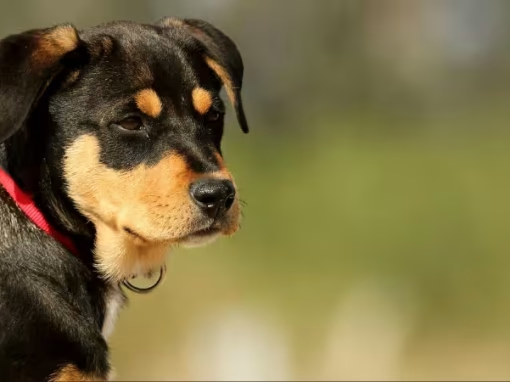
Fetch is one of the most rewarding skills you can develop with a dog — it burns energy, sharpens focus, and doubles as a solid recall exercise. The challenge is that not every dog fetches naturally. Some chase enthusiastically but refuse to return; others look at a thrown ball like it’s personally offended them. The key is breaking the behaviour into stages rather than expecting it to click all at once.
What You’ll Need Before You Start
The right toy
Don’t default to a tennis ball just because it’s traditional. Find the toy that genuinely excites your dog — a rope toy, a squeaky disc, a rubber ring. Motivation is everything in early training, and a dog that doesn’t care about the object won’t chase it. Once you’ve identified their preferred toy, keep it exclusively for fetch sessions so it retains novelty.
Realistic expectations by breed
Labrador Retrievers, Border Collies, and Spaniels often fetch instinctively because it mirrors their working purpose. Terriers, Chow Chows, and Basenjis may need considerably more work. Neither group is untrainable — the process is the same, the timeline differs. Use positive reinforcement training throughout, not corrections.
Step-by-Step Fetch Training
Step 1: Build toy drive
If your dog isn’t already excited by the toy, spend a few sessions making it interesting before you throw anything. Drag it along the ground, hide it behind your back, let them “win” it briefly in a game of tug. The goal is to make the toy the most interesting thing in the environment.
Step 2: Short throws only
Start by throwing the toy 1–2 metres. You want success, not distance. The moment your dog moves toward the toy, mark it with a “yes” or a clicker. Short throws mean your dog is back in front of you quickly, which is where the real training happens.
Step 3: Reward the return
When your dog picks up the toy and turns back toward you, make yourself irresistible — crouch down, open your arms, call them in an excited tone. When they arrive, immediately reward with a treat or a game of tug before you attempt to take the toy. This step is critical: the return has to feel like the best part of the game, not the end of it.
Step 4: Teach a clean drop
Train “drop it” as a separate command before you rely on it in fetch. Hold a high-value treat close to your dog’s nose while they hold the toy — most dogs will release it to investigate the treat. The moment the toy falls, reward. Never wrestle the object away or chase your dog when they have it. Both responses teach the dog that keeping the toy is more valuable than returning it.
Step 5: Extend gradually
Only increase throwing distance once your dog is reliably completing the full loop: chase, pick up, return, drop. Rushing this stage is where most people get stuck. Five consistent short reps are worth more than one spectacular long one.
Troubleshooting Common Problems
Dog won’t come back
This is the most common sticking point. Chasing your dog when they have the toy is the worst thing you can do — it becomes a game where holding onto the object is rewarding. Instead, turn away, crouch, or run in the opposite direction. If recall is consistently unreliable, practise it separately without the toy first. Check out these tips on walking and recall as a starting point.
Dog drops the toy halfway back
The reward at the end isn’t compelling enough. Try upgrading to a higher-value treat, using a more animated celebration, or switching to tug as the reward. Some dogs drop the toy because they’re conflicted — they want to keep it but also want to please you. Training treats can make a significant difference here.
Dog loses interest quickly
Keep sessions to 5–10 minutes maximum and always end while your dog is still keen. A dog that walks away mid-session is telling you the game went on too long. Shorter sessions repeated over several days will build the behaviour far more reliably than marathon sessions.
South African Conditions to Consider
Our summers are brutal in most parts of the country. Fetch on tarred driveways or sun-baked paving during midday can cause paw pad burns and heatstroke. Always train in the early morning or late afternoon, and keep fresh water accessible throughout. On the highveld, afternoon thunderstorms arrive quickly — don’t train in open spaces when the sky is building.
If your dog is under 12 months old, limit high-intensity fetch. Growth plates in larger breeds don’t close until around 12–18 months, and repetitive hard stops and direction changes put stress on developing joints. Keep it gentle and brief until they’re physically mature.
Taking Fetch Further
A dog with a reliable fetch has the foundation for much more advanced work. Directional sends, blind retrieves, and water retrieves are all natural progressions that develop focus and impulse control. The right toys make all the difference as you expand the game — choose objects that are durable, easy to carry, and appropriate for your dog’s size and bite strength.
Most importantly, keep it enjoyable. Fetch should be something your dog runs to the door for, not something they tolerate. If the enthusiasm isn’t there, step back a stage and rebuild the motivation before progressing.