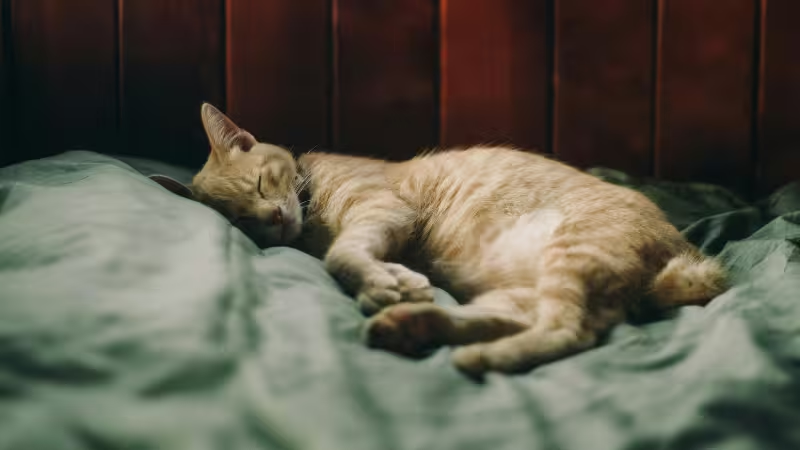
Your cat has been asleep all afternoon. The moment you turn off the bedroom light, she launches herself onto the curtains. Sound familiar? You are not imagining it, and you are not alone.
Cats are crepuscular by nature — biologically wired to be most active at dawn and dusk. In the wild, this timing aligns with peak prey activity. In a Cape Town flat at 2am, it just means cat zoomies at night and a very tired owner at 6am. The good news is that a cat’s routine is trainable. With consistent environmental management and behavioural adjustment, you can get a cat to sleep at night — or at least stay quiet while you do.
Why Cats Are Active at Night
Understanding the biology helps. Cats are not nocturnal — they are crepuscular, meaning their energy peaks around sunrise and sunset. Domestic cats, however, adapt their schedules around food availability and owner behaviour. If your cat has learned that 3am is when interesting things happen (or when you will reluctantly get up and fill the bowl), she has been trained — by you — to be active at night.
Kittens have less impulse control and shorter sleep cycles, which makes them more disruptive. Unneutered cats are driven by hormonal surges that intensify nocturnal restlessness. Older cats may be active at night due to cognitive dysfunction or pain — a veterinary check is warranted if a previously settled cat suddenly starts disturbing your sleep.
Daytime Enrichment: Spend the Energy Before Bedtime
A cat that is understimulated during the day will not sleep at night. This is the most common driver of nocturnal disruption, and it is entirely addressable.
Cats need outlets for predatory behaviour: stalking, pouncing, catching. Without these, that energy accumulates and gets released at midnight. Scheduled interactive play sessions — at least two per day, with one in the early evening — are non-negotiable if you want to train a cat to sleep through the night. Wand toys, feather lures, and laser pointers (always end with a catchable physical toy) engage the full predatory sequence.
Passive enrichment also helps: puzzle feeders, window perches with bird activity outside, cardboard boxes, rotating toy access. A mentally stimulated cat is a tired cat. Read more about how to structure this effectively in our guide on enrichment for indoor cats.
If you are unsure which toys provide the best engagement, our guide to choosing the best cat toys for your cat covers what to look for by age, personality, and play style.
The Pre-Bed Play and Feed Sequence
This is the single most effective technique for getting a cat to sleep at night: mimic the hunt-catch-eat-groom-sleep cycle that cats follow in the wild.
Approximately 30 to 45 minutes before your intended sleep time, run an active play session until your cat begins to disengage — that wind-down behaviour (slower movements, sitting, grooming mid-play) is the signal. Immediately follow with the last meal of the day. Cats naturally sleep after eating. If you time this correctly and stay consistent, you will have a cat that is ready to settle when you are.
Feeding timing matters beyond the pre-bed routine. Cats that are fed once a day have large energy-hunger cycles that can peak at inconvenient times. Split the daily food allowance across two or three meals. If free-feeding, be aware that unrestricted access to food removes one of your primary behavioural levers.
Stop Reinforcing the Wrong Behaviour
If your cat meows at the bedroom door, scratches the duvet, or knocks things off the bedside table at 4am and you respond — even once — you have taught her that this behaviour works. This is operant conditioning, and cats are very efficient learners.
Getting up to feed, to play, or even to scold, all count as reinforcement. The behaviour will continue and likely escalate.
The only effective response to attention-seeking at night is no response. This means complete and consistent ignoring. Expect the behaviour to get worse before it gets better (this is called an extinction burst — the cat tries harder before giving up). Blocking access to the bedroom removes the temptation to respond and protects your sleep in the short term while the new routine takes hold.
Kitten-Specific Considerations
Kittens under six months have genuinely high energy and short sleep cycles. Expecting a kitten to sleep quietly through the night without adequate daytime stimulation is unrealistic. Kittens also benefit from a companion — two kittens will often entertain each other and reduce the amount of nocturnal energy directed at you.
If you have recently introduced a kitten, structured play, consistent feeding times, and a predictable environment will establish good sleep habits early. These are much easier to build than to correct later. For foundational training principles that apply from kittenhood, our beginner’s guide to cat training is a useful starting point.
When to Rule Out a Health Issue
Sudden changes in a cat’s sleep behaviour — especially in cats over seven years old — warrant a veterinary assessment. Hyperthyroidism is a common cause of nocturnal restlessness in older cats and is straightforward to diagnose and manage. Pain from arthritis or dental disease can also disrupt sleep. Cognitive dysfunction syndrome (feline dementia) presents as night-time vocalisation and disorientation in senior cats.
If your cat has become active at night and this is new behaviour in an adult or senior animal, do not attempt to behaviourally manage what may be a medical issue. Get a vet check first.
Calming Aids: What Actually Helps
Calming products can support — but not replace — the behavioural interventions described above. Synthetic feline pheromone diffusers (such as Feliway) have reasonable evidence behind them for reducing stress-related behaviours including excessive vocalisation. They are most effective in multi-cat households or following changes to the home environment.
Calming supplements containing ingredients like L-theanine or alpha-casozepine may help anxious cats settle. These are available from veterinary practices and some pet retailers. Sedatives are not appropriate as a routine sleep management tool and should only be used under veterinary direction for specific clinical situations.
If your cat’s nocturnal behaviour is linked to multi-cat tension in the home, the underlying social dynamic needs addressing — calming aids alone will not resolve it. Our guide on stopping cats from fighting covers how to manage inter-cat conflict that may be contributing to anxiety and restlessness.
Building a Routine That Sticks
Cats are creatures of habit. Consistency is the mechanism through which all of the above actually works. A cat that receives active play at 7pm, followed by a meal at 7:45pm, and is excluded from the bedroom for the first two weeks of a new routine, will adapt. Disrupting that schedule — feeding on demand, responding to night-time vocalisation, skipping evening play — resets the clock.
Give any new routine a minimum of two to three weeks of consistent application before assessing whether it is working. If you are not seeing improvement after a month of consistent management, a behaviour consultation can identify what is being missed.
If you are dealing with additional behavioural issues alongside sleep disruption — such as biting or scratching — addressing enrichment and routine will often improve multiple problems simultaneously. Our post on how to stop your cat from biting addresses the frustration-arousal link that often underlies both.