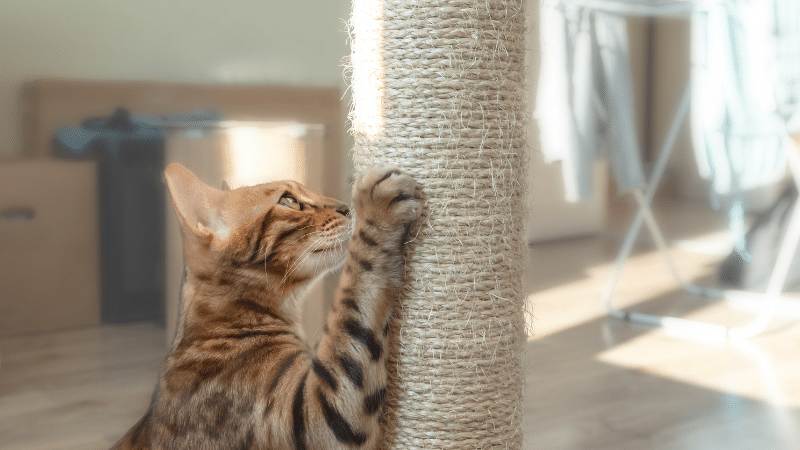
The myth that cats can’t be trained gets passed around so often people stop questioning it. The truth is that cats train brilliantly — they just don’t work for praise the way dogs do. How to train a cat comes down to one principle: figure out what your cat actually wants, then make that thing depend on the behaviour you’re after. Done right, you can teach most cats to sit, come when called, walk on a lead, tolerate nail clipping, and stop scratching the furniture — usually within a few weeks.
What Actually Motivates a Cat
Cats are cognitively complex but socially independent. Verbal praise alone rarely changes their behaviour. What works:
- High-value food rewards — small bits of cooked chicken, plain tuna, or freeze-dried meat treats. The treat should be tiny (pea-sized) and reserved for training only
- Play — for cats that go mad over a feather wand, a 30-second play burst can be a more powerful reward than food
- Access — being let onto the bed, into a sunny room, or out into a secure garden
What doesn’t work: shouting, water spray bottles, scolding, or rubbing their nose in mistakes. Cats don’t connect punishment to behaviour the way dogs partially can — they connect it to you. Punishment-based training is how you end up with a cat that hides when you walk into the room.
The Clicker (or a Pen That Clicks)
A clicker is a small handheld device that makes a sharp click sound. It marks the exact moment your cat does the right thing, which is critical because cats lose interest fast and timing has to be precise. If you don’t have a clicker, the click of a ballpoint pen works.
To “load” the clicker: click, immediately give a treat. Repeat 10 times in a quiet room. Within two short sessions your cat will look at you expectantly when they hear the click — the sound now means a treat is coming. From there you can use the click to mark any behaviour you want to reinforce.
Sit: The First Behaviour to Teach
Sit is the easiest behaviour to start with because cats already do it constantly. The trick is putting it on cue:
- Hold a treat just above your cat’s head, slightly back
- As they tilt up to follow the treat, their bottom drops naturally
- The instant their bottom touches the ground, click and give the treat
- Repeat 5–8 times, then end the session
- After 2–3 sessions, add the word “sit” just before they drop
Sessions should be short — three to five minutes maximum. Cats hit a frustration ceiling much faster than dogs and a long session sours them on training entirely.
Come When Called
Cats can absolutely come when called — most just don’t, because they’ve never been given a reason to. Start at home:
- Pick a unique sound or word (“Smokey, come” or a specific kissy noise)
- Use it only at meal times for the first week — say it, then put the food bowl down
- Once they’re running to the kitchen on the cue, start using it at random times during the day with a high-value treat
- Reward every single response for the first month — recall is a behaviour that fades fast if it stops paying off
This skill is genuinely useful: a cat that comes when called is a cat you can find when it’s time for the vet, when a thunderstorm is coming, or when they’ve slipped out at dusk.
Stopping Bad Behaviour the Right Way
Most “bad” behaviour is a cat doing exactly what cats are supposed to do. Scratching, climbing, hunting, and biting are normal — your job is to redirect, not suppress. Some examples:
- Scratching the sofa — provide a sturdy, tall scratching post next to the spot they’re targeting and reward use heavily
- Biting hands — stop using hands as toys, switch to feather wands and kicker toys. Our guide on stopping cat biting covers this in detail
- Counter surfing — make counters less rewarding (no food left out) and provide a high perch elsewhere with a view
- Aggression toward other cats in the house — see our article on stopping cats fighting
Litter Tray Basics
Litter training is rarely needed — most kittens learn from their mothers in the first weeks. The exceptions are orphaned kittens and adult cats who suddenly start missing the tray. The fix is almost always environmental: tray too small, litter too perfumed, tray near the food, or one tray for too many cats. Our litter training guide walks through the setup. The vet rule: any sudden change in litter habits in an adult cat warrants a check-up to rule out urinary tract issues.
Advanced Skills Worth Teaching
Once sit and recall are solid, the doors open. Cats can learn to walk on a harness (see our cat leash training guide), tolerate nail clipping, accept being brushed, and even do tricks like high-fives and spin. The principle is the same every time: small steps, high-value rewards, short sessions, and never push past the cat’s tolerance.
Realistic Expectations
You will not train a cat to be a dog. They train on their own schedule, in short bursts, and only when they decide to. Some cats — particularly active breeds like the Maine Coon or Bengal — take to training with obvious enthusiasm. Others learn one or two behaviours and call it a career. Both outcomes are normal. The point isn’t obedience; it’s communication, mental enrichment, and a happier cat. For broader enrichment ideas, our guide on indoor cat enrichment picks up where training leaves off.