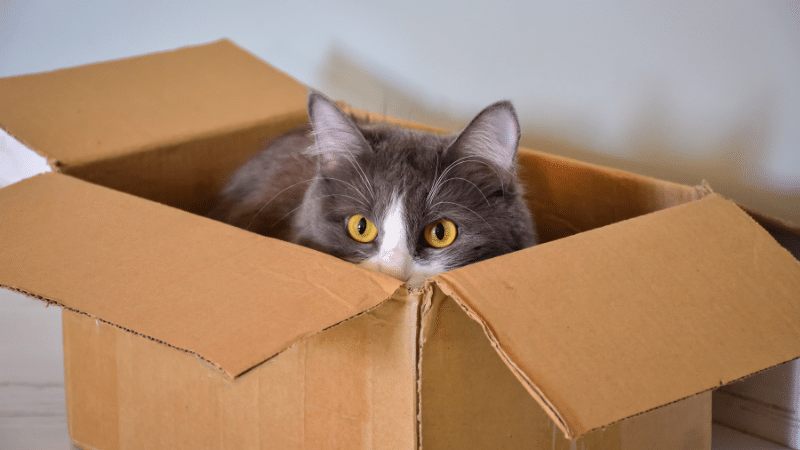
Cats communicate constantly — just not in ways that are always obvious to humans. Where dogs wear their emotions on their sleeve (or tail), cats are subtler. A slow blink, a tail position, the angle of an ear — each carries meaning. Learning to read these signals transforms your relationship with your cat from guesswork to genuine understanding.
Cat Body Language
The Tail
A cat’s tail is one of its most expressive features:
- Tail held high: Confident, happy, approachable. A cat walking towards you with its tail up is saying “I’m glad to see you.”
- Tail puffed up (bottle-brush): Frightened or startled. The cat is trying to appear larger.
- Tail tucked under: Anxious, submissive, or in pain.
- Tail swishing side to side: Agitated or hunting. Unlike a dog’s wag, this is not a happy signal — a swishing cat is worked up.
- Tail wrapped around you or another cat: Affection and trust, similar to a human putting an arm around someone.
The Ears
- Forward-facing: Alert, interested, confident.
- Rotated sideways (airplane ears): Anxious or uncertain.
- Flat against the head: Fearful or aggressive. This is a warning — do not approach.
The Eyes
- Slow blink: This is the famous “cat kiss.” A slow, deliberate blink means your cat trusts you and feels relaxed. You can slow-blink back — studies confirm cats respond positively.
- Dilated pupils: Aroused — could be excitement, fear, or hunting mode. Context determines which.
- Narrow pupils (slits): Calm and content in normal light, but combined with a stiff body can indicate aggression.
- Direct stare: In cat language, prolonged eye contact is confrontational. If a strange cat stares at yours, that’s a challenge.
Body Posture
- Belly exposed: Trust — but not necessarily an invitation to touch. Many cats show their belly when relaxed but will swat if you reach for it. Test cautiously.
- Arched back with fur raised: Defensive posture. The cat feels threatened and is making itself look bigger.
- Head butting (bunting): Affection and scent-marking. Cats have scent glands on their foreheads and cheeks — rubbing against you deposits their scent and claims you as “theirs.”
Common Cat Behaviours Decoded
Kneading
When your cat rhythmically pushes its paws against a soft surface (or your lap), it’s a behaviour carried over from kittenhood — kittens knead their mother’s belly to stimulate milk flow. In adult cats, kneading signals deep contentment and comfort. Read more about the science behind kneading.
Purring
Usually indicates contentment, but cats also purr when stressed, in pain, or seeking comfort — it’s a self-soothing mechanism as much as a sign of happiness. Learn more in our guide to why cats purr.
Bringing You “Gifts”
A cat that brings you a dead (or half-dead) mouse, bird, or lizard isn’t being morbid — it’s sharing food with you as a member of its social group. Some behaviourists suggest it’s also an attempt to teach you to hunt.
Knocking Things Off Tables
This is partly play (investigating gravity and cause-and-effect) and partly attention-seeking. If you react every time your cat pushes a glass off the counter, they’ve learned it’s an effective way to get your attention.
Scratching Furniture
Cats scratch to maintain their claws, stretch their muscles, and mark territory (scent glands in the paws deposit pheromones). It’s not destructive behaviour — it’s essential behaviour directed at the wrong surface. Redirect it with a scratching post and see our guide to stopping furniture scratching.
Chattering at Birds
That rapid jaw movement your cat makes while watching birds through the window is called chattering. The exact cause is debated — theories range from frustration at not being able to hunt, to a reflexive jaw movement mimicking the killing bite, to sheer excitement.
Vocalisations
- Meow: Adult cats primarily meow at humans, not at other cats. Each cat develops a unique vocabulary of meows tailored to their owner. Read our full guide to why cats meow.
- Trill/chirrup: A greeting. Mother cats trill to their kittens; your cat trills to greet you.
- Hiss: A clear warning — the cat feels threatened and will attack if pushed further.
- Yowl: A long, low, loud vocalisation that can signal pain, mating behaviour (heat cycles), cognitive decline in older cats, or territorial disputes.
When Behaviour Changes Suddenly
A sudden change in your cat’s behaviour — hiding, aggression, litter avoidance, excessive vocalisation, or loss of appetite — is almost always significant. Common medical causes include urinary tract infections, dental pain, hyperthyroidism, and arthritis. Always consult a vet before assuming a behavioural cause.
Understanding cat behaviour isn’t about becoming a mind reader — it’s about paying attention to patterns and responding appropriately. Once you learn your cat’s language, the relationship deepens in ways that surprise most owners.